July 23–24, 2026, Makassar, Indonesia
The 2nd ICOSDEG: International Conference on Sustainable and Democratic Governance
Theme: Bridging Technology, Green Energy, and Environmental Sustainability
Hybrid Conference
On-site & Online Participation
ICOSDEG 2026 will be conducted in a hybrid format, allowing participants to present and attend either in person in Makassar, Indonesia, or virtually through an interactive online platform. This format ensures inclusive and accessible academic engagement for all participants.
Publication Opportunity
Selected papers will be considered for publication in indexed international conference proceedings (Scopus/Web of Science) and partner journals. Authors of accepted abstracts are required to submit full papers, which will undergo a review and editorial process in accordance with the standards of each publication outlet.
Elevate Knowledge
Inspire Innovation
This conference brings together scholars, policymakers, and practitioners to engage in critical dialogue on sustainability, environmental challenges, and democratic governance. It provides a platform to explore how ecological transitions, environmental justice, and participatory governance can shape more sustainable, inclusive, and resilient futures.
About the Conference
We are excited to announce The 2nd ICOSDEG: International Conference on Sustainable and Democratic Governance (ICOSDEG), Theme: Bridging Technology, Green Energy, and Environmental Sustainability, a platform dedicated to fostering collaboration and innovation in the academic and policy realm. This conference brings together researchers, public administration scholars, policymakers, practitioners, and technologists from around the globe to share insights, discuss advancements, and explore how technology-enabled governance and green energy strategies can accelerate environmental sustainability. With the accelerating pace of climate change, resource depletion, and environmental degradation, this conference aims to promote evidence-based public organization and governance approaches that support engineering-driven solutions, innovative policy instruments, and cross-sector partnerships for a sustainable and resilient future.
Amid growing global challenges—ranging from digital disruption and democratic fragility to social inequality and environmental sustainability—this conference aims to foster critical and evidence-based discussions on how governance systems can adapt and respond. It highlights the need for inclusive, accountable, and sustainable governance frameworks in an increasingly digital and interconnected world.
Important Dates
We invite researchers and scholars to submit abstracts and full papers aligned with the conference theme.
Paper Submission Guidelines
Template Download
Host & Co-host
Welcome Remarks & Keynote Speakers

Welcoming Speech
Dr. Andi Luhur Prianto
Universitas Muhammadiyah Makassar, Indonesia
Expertise: Sustainable Governance and Climate Change Resilience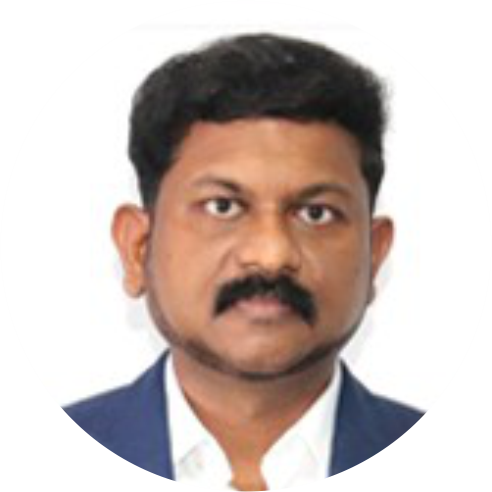
Keynote Address
Dr. Rabbiraj C.
VIT School of Law, Chennai, India
Expertise: Technology and law in environmental governance
Keynote Address
Elmer M. Soriano, Ph.D
Polytechnic University of the Philippines
Expertise: Sustainable public administration; Climate governance and Public sector innovation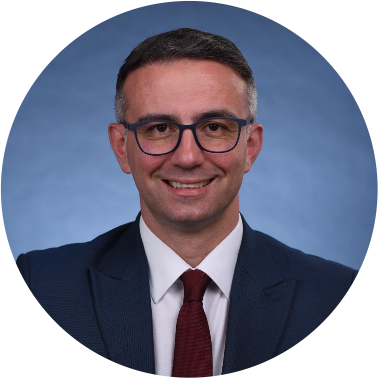
Invited Speaker
Prof. Dr. sc. Goran Ilik
Faculty of Law, University St. Kliment Ohridski, North Macedonia
Expertise: EU Environmental Law; Environmental Rights; Global Environmental Governance
Invited Speaker
Prof. Septiana Dwiputranti, SE, M.Com (Hons), Ph.D
Politeknik STIA LAN Bandung, Indonesia
Expertise: Sustainable Public Policy and Environmental Governance
Invited Speaker
Joanne V. Mangindaan, S.E., M.Buss.Acc., Ph.D
Universitas Sam Ratulangi, Indonesia
Expertise: Green Finance and Sustainable Investment; Sustainability Accounting and Environmental Disclosure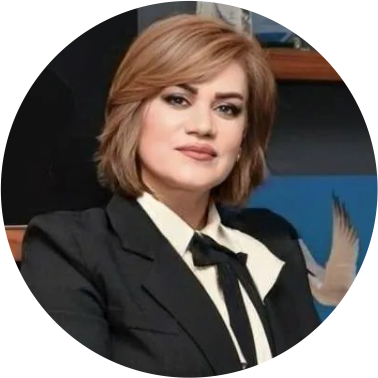
Invited Speaker
Dr. Paiman Ahmad
University of Raparin - Kurdistan, Iraq
Expertise: Climate Change; Energy Transition; Economic development
Invited Speaker
Estefanie R. Cortez, Ph.D
College Political Science and Public Administration, Polytechnic University of the Philippines
Expertise: Environmental, Social, and Governance (ESG); Sustainability Transitions
Invoted Speaker
Essaki Ammal K.
School of Law, Vellore Institute of Technology, Chennai, India
Expertise: Environmental Taxation and Green Fiscal PolicyConference Tracks and Topics
We are seeking individuals to participate in the review process and chair sessions for the following tracks.
Policy, Governance, Finance, and Capacity Building for Sustainability Transitions
- Environmental and energy policy instruments: regulation, compliance, and ethics.
- Smart organizations and institutional governance for clean technology scaling.
- Public–private partnerships and public-sector HR management for public organization.
- Green finance, ESG, and public investment with equality/just transition metrics.
- Education and skills for green jobs, focusing on inclusive capacity building.
- Democratic governance mechanisms in sustainability transitions: participation, transparency, and accountability.
- Inclusive policymaking and deliberative processes in environmental governance.
Renewable and Low-Carbon Energy Systems
- Solar, wind, hydro, geothermal, bioenergy.
- Hybrid systems, distributed generation, microgrids.
- Energy storage (batteries), hydrogen, fuel cells.
- Energy efficiency in buildings, industry, and communities.
- Techno-economic and sustainability assessment of energy systems.
- Energy governance, community participation, and energy justice in low-carbon transitions.
- Democratization of energy systems: decentralized governance and citizen-led energy initiatives.
Environmental Monitoring, Remote Sensing, and Digital Analytics
- Air, water, and soil quality monitoring technologies.
- Remote sensing, GIS, spatial analysis, and environmental mapping.
- Environmental modelling, forecasting, and impact assessment.
- IoT sensor networks and smart monitoring platforms.
- AI/ML and big data analytics for environmental decision support.
- Data governance, transparency, and public access in environmental monitoring systems.
- Ethics and accountability in AI-driven environmental decision-making.
Climate Change, Carbon Management, and Resilience
- GHG inventories, MRV systems, and decarbonization pathways.
- Carbon footprinting, LCA, and environmental performance metrics.
- Climate risk, vulnerability assessment, and adaptation strategies.
- Resilient infrastructure planning and disaster risk reduction.
- Nature-based solutions and ecosystem services for climate action.
- Climate governance, multi-level coordination, and participatory adaptation strategies.
- Climate justice and equitable decision-making in resilience planning.
Circular Economy, Waste Management, and Cleaner Production
- Waste minimization, segregation, recycling, and recovery systems.
- Waste-to-energy, anaerobic digestion, composting, and resource recovery.
- Plastics, e-waste, hazardous waste, and emerging waste streams.
- Cleaner production in manufacturing and industry; pollution prevention.
- Industrial ecology, eco-design, green supply chains, and circular business models.
- Governance of circular economy: stakeholder participation and regulatory frameworks.
- Community-based waste governance and inclusive environmental decision-making.
Urban Sustainability and Smart Infrastructure
- Sustainable transport and low-carbon mobility systems.
- Smart/green buildings and energy-efficient urban design.
- Urban air quality, water systems, and land-use sustainability.
- Smart city applications for environmental management and service delivery.
- Resilient and sustainable infrastructure systems.
- Urban governance, citizen engagement, and participatory planning in smart cities.
- Digital governance and accountability in smart infrastructure systems.
Other related topics
Submissions aligned with the conference theme are welcome.
Registration Fees
Registration Plan
| Category | Fee | Registration Deadline | Payment Deadline |
|---|---|---|---|
| In-Person Participation | |||
| Presenter | 100 USD | 30 June 2026 | 5 July 2026 |
| Non Presenter | 25 USD | 30 June 2026 | 5 July 2026 |
| Online Participation | |||
| Presenter | 50 USD | 30 June 2026 | 5 July 2026 |
| Non Presenter | Free | 30 June 2026 | - |
The registration fee for non-scientist companions (spouses and/or family members) to attend the conference (including free access to coffee breaks, lunches, and the icebreaker or welcome dinner) is 25 USD per person.
All prices include taxes and fees; however, registrants must pay any transfer costs incurred by banks.
Publications
Proceedings
Selected papers presented at the conference will be published in internationally indexed conference proceedings (Scopus/Web of Science). This publication aims to ensure broad and timely dissemination of high-quality research while maintaining strong academic visibility.
Journal Partnerships
The conference collaborates with several reputable journals to provide extended publication opportunities for selected papers. Partner journals include Journal of Liberty and International Affairs (Scopus Q3), Otoritas: Jurnal Ilmu Pemerintahan (WoS/SINTA 1), and Journal of Contemporary Governance and Public Policy (SINTA 2). All submissions will undergo a rigorous peer-review process in accordance with each journal’s standards.
The Committee
Steering Committee
Prof. Pamela Grace C. Muhi, DPA
Polytechnic University of the Philippines
Prof. Dr. Dyah Mutiarin, Msi
Universitas Muhammadiyah Yogyakarta, Indonesia
Prof. Dr. Ahmad Nurmandi, M.Sc
Universitas Muhammadiyah Yogyakarta, Indonesia
Prof. Florenda S. Frivaldo, DPA
Polytechnic University of the Philippines
Dr. Daud M. Liando, SIP, M.Si
Universitas Sam Ratulangi, Indonesia
Dr. Ihyani Malik, S.Sos., M.Si
Universitas Muhammadiyah Makassar, Indonesia
Prof. Muhlis Madani
Universitas Muhammadiyah Makassar, Indonesia
Senior Experts / External Reviewers
Uday Chatterjee M.Sc. Ph.D
Bhatter College, Dantan, India
Dr. Anbarasi G
The Tamilnadu Dr. Ambedkar Law University, India
Ramces Mayabason Dili, Ph. D
Polytechnic University of the Philippines
Arifeen Yama, Ph.D
Chulalongkorn University, Thailand
Dr. Siti Widharetno M., S.IP., M.Si
Politeknik STIA LAN Bandung, Indonesia
General Chairs and Representatives
Nursaleh Hartaman, S.IP., M.IP
Universitas Muhammadiyah Makassar, Indonesia
Lidia Maasir, B.Comm. (Hons), MHRM.
Politeknik STIA LAN Bandung, Indonesia
Nur Khaerah, S.IP., M.IP
Universitas Muhammadiyah Makassar, Indonesia
Lulu Qurrata A'yun
Universitas Sam Ratulangi, Indonesia
Organizing Committee
Aqmal Reza Amri, S.IP., M.Phil
Otoritas Semesta Sains, Indonesia
Organizing Committee Secretary
Rusliadi, S.Sos., M.A.P
Universitas Muhammadiyah Makassar, Indonesia
Andi Iqra Syamsul Bahri, S.AP., M.AP
Otoritas Semesta Sains, Indonesia
Scientific / Program Committee
Prof. Dr. Dinil Pushpalal
Tohoku University, Sendai, Japan
Dr. Alfon Kimbal
Universitas Sam Ratulangi, Indonesia
Christine B. Tenorio, Ph.D
Mindanao State University, Philippines
Nasrulhaq, Ph.D
University of Palermo
Dr. Andi Annisa Amalia
Universitas Gadjah Mada